- Presentation
- Research
- REGARN : Regulatory non-coding RNAs in root plasticity
- ChromD : Chromosome Dynamics
- SILAB : Signaling pathways regulating Legume root system Architecture through Beneficial bacteria
- Qlab : Plant Quantitative Genomics and Epigenomics
- FLOCAD : Flower and Carpel Development
- CCARS : Climate Change & Redox Signaling
- STRESS : Stress signaling
- MetaboActions : Signaling, regulation and metabolic interactions
- DPHYS : Department Physiology and signaling
- GDYNPATH: Genome Dynamics and Pathogen Resistance
- SYMUNITY: Symbiosis and Immunity
- OGE: Organellar gene expression
- GNet : Genomic Networks
- GUILLOTIN Lab
- Teaching
- Platforms
- Databases

GUILLOTIN Lab
GUILLOTIN Lab
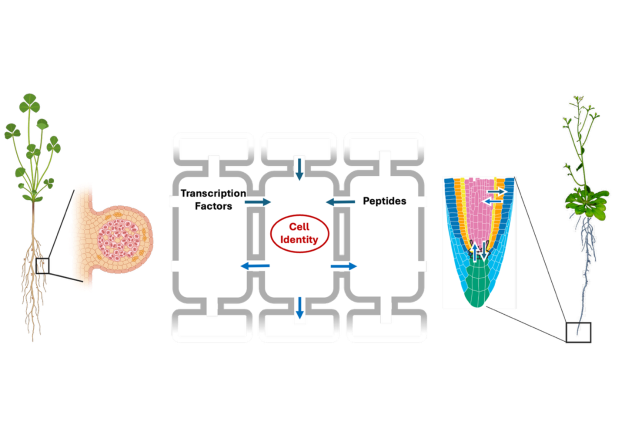
The development of multicellular organisms relies on the tight coordination of its different cells to position at the right place and at the right time, promoting coordinated growth and controlled morphogenesis. In plant, every cells are connected directly to its neighbor by channels called plasmodesmata allowing the direct transfer of signals coded by numerous molecules, from nutrients, RNA and proteins. Correct integration of these different signals influence cell identity and play a crucial role in organ patterning.
In the GUILLOTIN-lab we are investigating how cells communicate with each other leading to their correct positioning within an organ. More specifically we are interested in proteins and peptides moving through plasmodesmata.
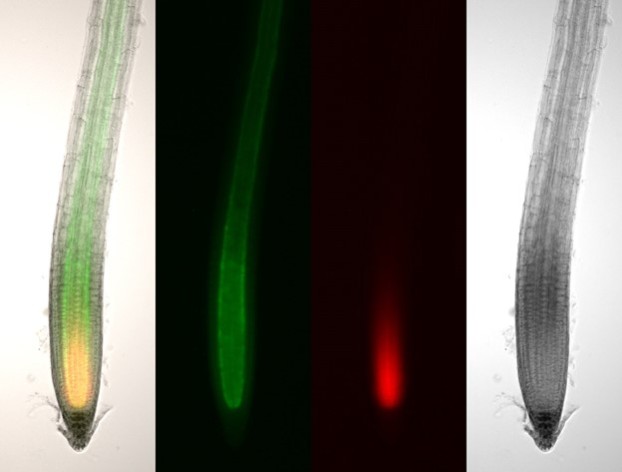
Using the arabidopsis root system as a model, we are investigating which transcription factors are moving between cells and their role in organ development and cell identity. In parallel, we are looking more broadly to discover any protein that can move between cell to better understand the dynamic and the extends of cell-cell communication.
The lab is also interested in peptide expressed during root development and symbiotic interactions. By looking at conserved cell specifically expressed peptide across legume species we aim at discovering, novel actors of organ morphogenesis and symbiosis regulators.
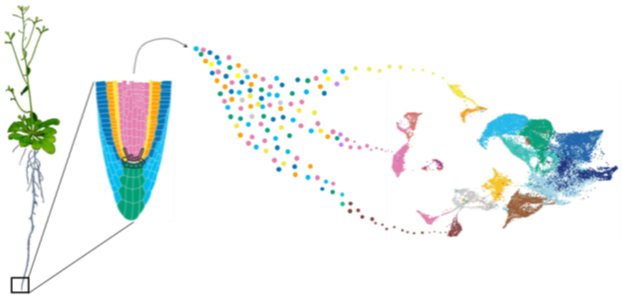
In parallel, the lab is developing several protocols and extensively use different single cell RNAseq technologies. We provide advice and training on how to best chose the right single cell platform for your biological question in plant biology.