- Presentation
- Research
- REGARN : Regulatory non-coding RNAs in root plasticity
- ChromD : Chromosome Dynamics
- SILAB : Signaling pathways regulating Legume root system Architecture through Beneficial bacteria
- Qlab : Plant Quantitative Genomics and Epigenomics
- FLOCAD : Flower and Carpel Development
- CCARS : Climate Change & Redox Signaling
- STRESS : Stress signaling
- MetaboActions : Signaling, regulation and metabolic interactions
- DPHYS : Department Physiology and signaling
- GDYNPATH: Genome Dynamics and Pathogen Resistance
- SYMUNITY: Symbiosis and Immunity
- OGE: Organellar gene expression
- GNet : Genomic Networks
- GUILLOTIN Lab
- Teaching
- Platforms
- Databases


SILAB: Signaling pathways regulating Legume root system Architecture through Beneficial bacteria
Team SILAB / Florian Frugier
SiLAB’s scientific project deals with the interactions between plant root systems and beneficial bacteria. This includes both nitrogen-fixing bacteria, collectively called rhizobia, which interact with legume plants to form a new symbiotic organ, the root nodule; and plant growth-promoting bacteria, especially those that are endophytes of legume nodules.
Our research aims to understand how the host plant regulates these beneficial interactions, particularly in relation to mineral nitrogen availability. This involves: 1) local signaling pathways in roots that enable the perception and recognition of these bacteria as beneficial and to modulate their entry depending on local mineral nitrogen availability; and 2) long distance systemic pathways acting between roots and shoots to integrate plant nutritional needs.
The regulatory pathways analyzed involve peptide and non-peptide hormones, with a focus on CLE and CEP signaling peptide families, as well as on cytokinin, gibberellin, and ethylene hormones. We also emphasize the integration of chromatin and transcriptional regulations linked to nutritional and hormonal signals related to these beneficial plant-microbe interactions.
More broadly, in the context of climate change, we aim to understand, how other mineral nutrients environmental cues, such as carbon or phosphate, integrate with these beneficial bacteria and nitrogen-related systemic regulatory pathways. We also explore how these plant-beneficial bacteria interactions modulate root system architecture (root growth and branching) and root cell-type differentiation, as well as environmental stress responses and notably the systemic priming of plant defense.
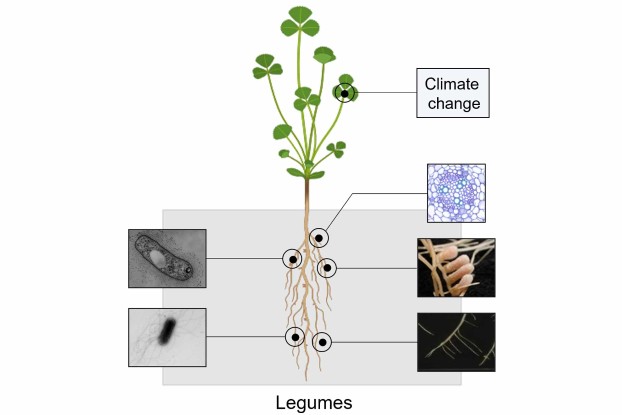
To reach these objectives, the main research axes of SiLAB aim at:
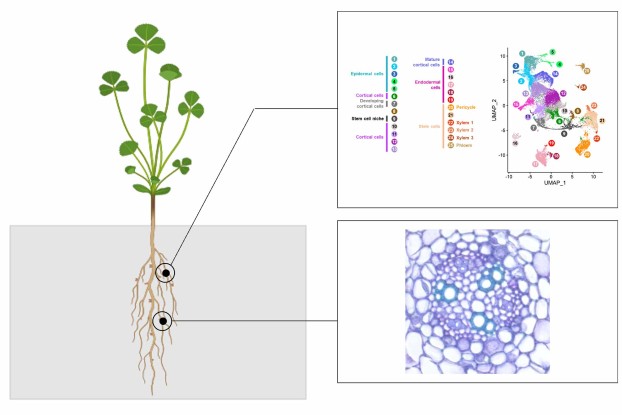
Determining the root cell-type specific impact of an expanded repertoire of signaling peptide families in mediating beneficial plant-bacteria interactions (coordination: Florian Frugier).
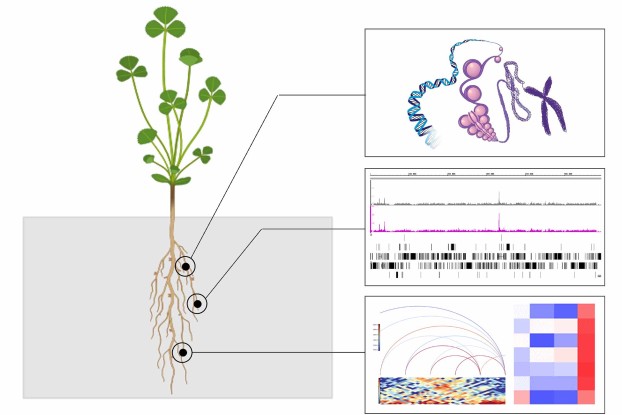
Integrating the chromatin and transcriptional regulations involved in response to different nutrients and beneficial microbes (coordination: Camille Fonouni-Farde).
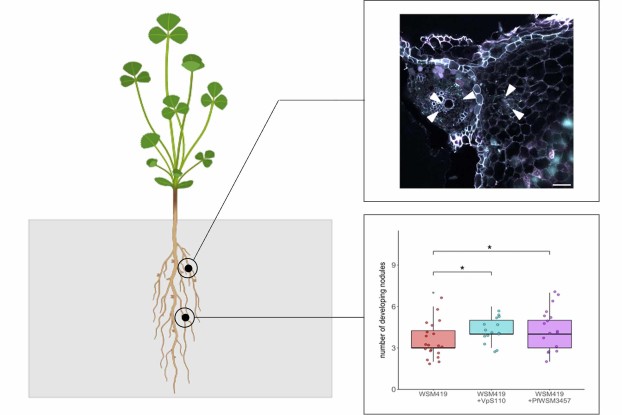
Expanding the role of local and systemic pathways identified in the context of the rhizobium nitrogen-fixing symbiosis to other beneficial plant-microbe interactions (coordination: Axel de Zélicourt).
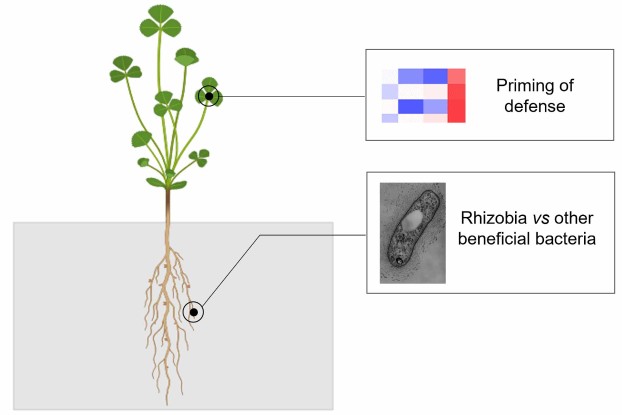
Analyzing how rhizobia or beneficial bacteria can improve plant stress resilience in symbiotic legume plants, especially through the systemic priming of defense responses (coordination: Anouck Diet).
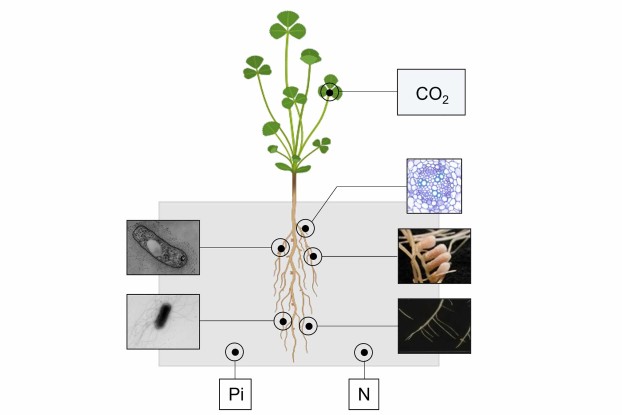
Integrating, in the context of climate change, how different nutrients such as CO2 and phosphate availability, impact root nodulation, notably through the CEP/CRA2 nitrogen-related signaling pathway (coordination: Florian Frugier).
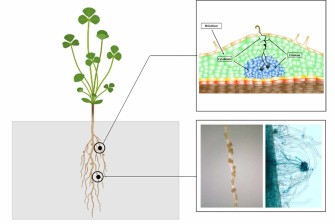
Identifying how the local cytokinin pathway interacts with ethylene biosynthesis and signaling to regulate nodulation and root system architecture (coordination: Mathias Brault).