- Presentation
- Research
- REGARN : Regulatory non-coding RNAs in root plasticity
- ChromD : Chromosome Dynamics
- SILAB : Signaling pathways regulating Legume root system Architecture through Beneficial bacteria
- Qlab : Plant Quantitative Genomics and Epigenomics
- FLOCAD : Flower and Carpel Development
- CCARS : Climate Change & Redox Signaling
- STRESS : Stress signaling
- MetaboActions : Signaling, regulation and metabolic interactions
- DPHYS : Department Physiology and signaling
- GDYNPATH: Genome Dynamics and Pathogen Resistance
- SYMUNITY: Symbiosis and Immunity
- OGE: Organellar gene expression
- GNet : Genomic Networks
- GUILLOTIN Lab
- Teaching
- Platforms
- Databases

The Three Research Areas at IPS2
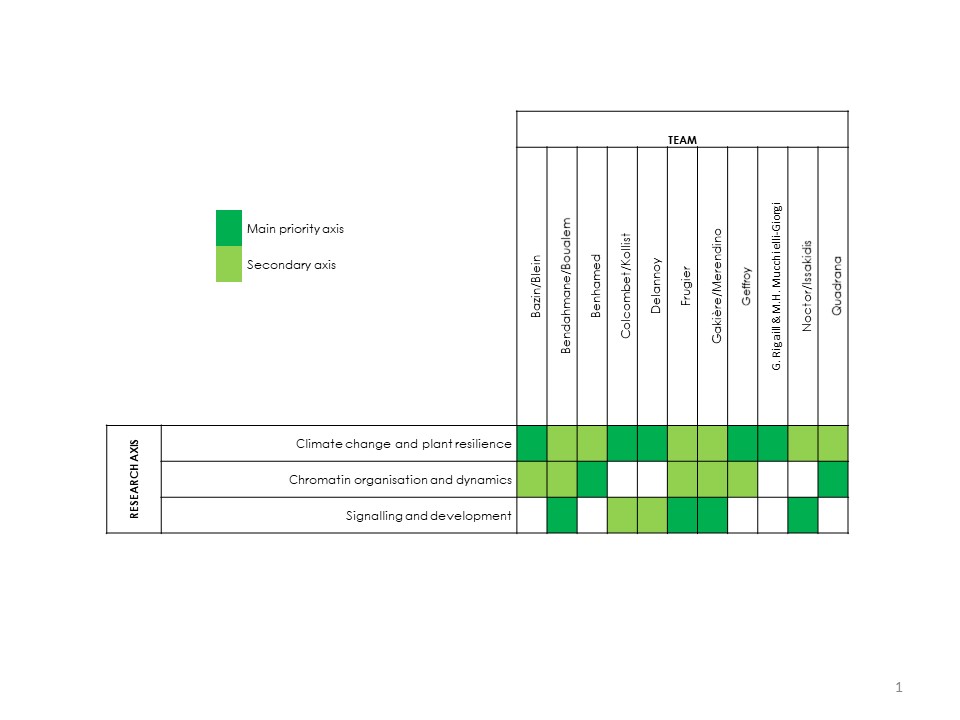
At IPS2, research focuses on three areas, all of which address major societal challenges such as climate change and sustainable agriculture. The work aims to drive innovation in key fields: creating new traits in plants, developing biological alternatives to agricultural chemicals, and improving plant breeding through genomics. Each area is led by a pair of principal investigators who coordinate its scientific direction.
Climate Change and Plant Resilience

Understanding how plants are affected by ongoing climate change and proposing innovative strategies to improve their resilience to multiple stresses Chromatin Organization and Dynamics
Chromatin Organization and Dynamics

Understanding how evolution, adaptation to the environment, and the expression of plant genomes are coordinated by epigenetic regulations, the dynamics of transposable elements, and the three-dimensional structure of chromatin
Signaling and Development.

Understanding how plants adapt their development to environmental changes via specific signaling pathways, particularly in the context of stress caused by climate change