- Presentation
- Research
- REGARN : Regulatory non-coding RNAs in root plasticity
- ChromD : Chromosome Dynamics
- SILAB : Signaling pathways regulating Legume root system Architecture through Beneficial bacteria
- Qlab : Plant Quantitative Genomics and Epigenomics
- FLOCAD : Flower and Carpel Development
- CCARS : Climate Change & Redox Signaling
- STRESS : Stress signaling
- MetaboActions : Signaling, regulation and metabolic interactions
- DPHYS : Department Physiology and signaling
- GDYNPATH: Genome Dynamics and Pathogen Resistance
- SYMUNITY: Symbiosis and Immunity
- OGE: Organellar gene expression
- GNet : Genomic Networks
- GUILLOTIN Lab
- Teaching
- Platforms
- Databases


A bacteria beneficial in low nitrogen
A beneficial bacteria improves plant growth under low fertilization conditions
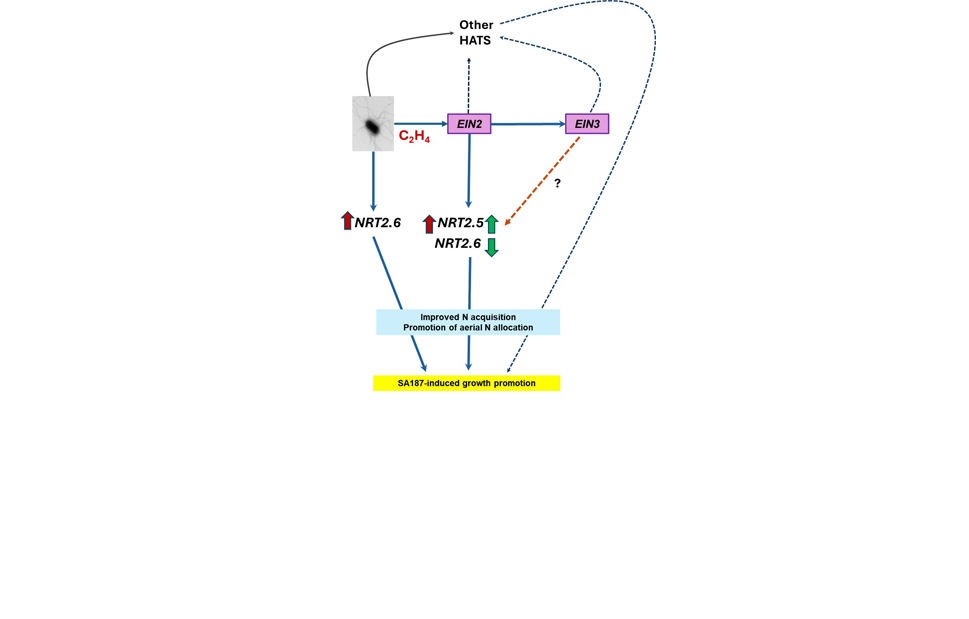
Developing alternatives to synthetic nitrogen fertilizers is a key challenge for reconciling agricultural productivity with reducing detrimental environmental impacts. In a study published in New Phytologist, scientists from the Institute of Plant Sciences-Paris Saclay (IPS2) demonstrated that Enterobacter sp. SA187, a non-nitrogen-fixing endophytic bacterium already known to enhance plant tolerance to various environmental stresses, can improve plant growth under low nitrogen conditions.
Using the model plant Arabidopsis thaliana, they showed that this bacterium strongly stimulates growth when the plant has access to very low levels of nitrate. This improvement is based on increased absorption and internal redistribution of nitrate, associated with an increased expression of genes encoding the high-affinity nitrate transporters NRT2.5 and NRT2.6. Using transcriptomic and genetic approaches, the study also reveals that this process is largely mediated by the activation of the phytohormone ethylene signaling pathway.
This work sheds new lights on how beneficial microorganisms can reprogram the transcriptome and plant development to optimize nitrogen use. It opens promising avenues for the development of more sustainable agricultural strategies based on microbial inputs to reduce the use of synthetic nitrogen fertilizers.
30/01/2026