- Presentation
- Research
- REGARN : Regulatory non-coding RNAs in root plasticity
- ChromD : Chromosome Dynamics
- SILAB : Signaling pathways regulating Legume root system Architecture through Beneficial bacteria
- Qlab : Plant Quantitative Genomics and Epigenomics
- FLOCAD : Flower and Carpel Development
- CCARS : Climate Change & Redox Signaling
- STRESS : Stress signaling
- MetaboActions : Signaling, regulation and metabolic interactions
- DPHYS : Department Physiology and signaling
- GDYNPATH: Genome Dynamics and Pathogen Resistance
- SYMUNITY: Symbiosis and Immunity
- OGE: Organellar gene expression
- GNet : Genomic Networks
- GUILLOTIN Lab
- Teaching
- Platforms
- Databases


A NLR gene from bean allowing a large and strong resistance to potyviruses
The I gene defines a dynamic NLR cluster conferring broad potyvirus resistance in common bean
In a study published in the journal Nature Communications, scientists from the GEDY teamat the Institute of Plant Sciences in Paris-Saclay (IPS2) investigated the genetic origin of a major resistance to viruses in common bean (Phaseolus vulgaris), a legume crop essential for global human nutrition.
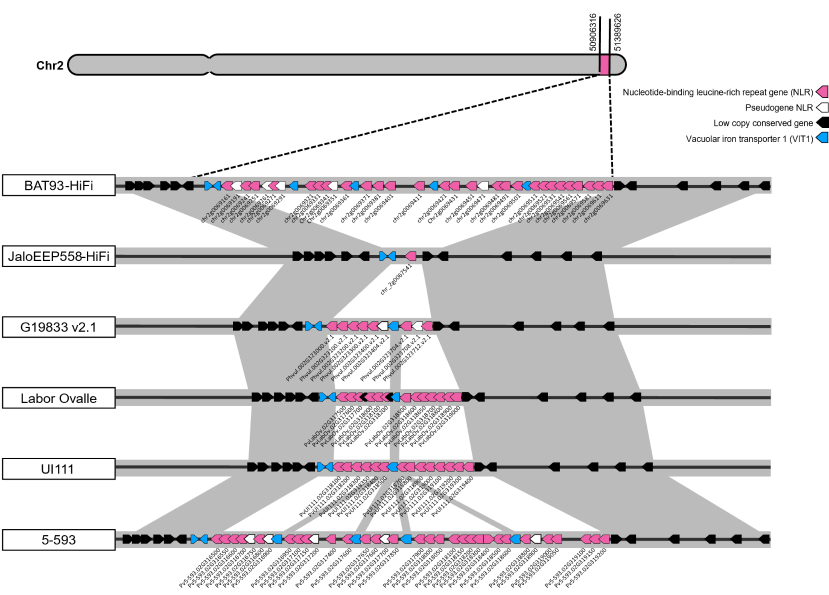
For nearly a century, a gene called I has effectively protected the common bean against several potyviruses responsible for severe yield losses, notably the bean common mosaic virus (BCMV) and the bean common mosaic necrotic virus (BCMNV). Despite its agronomic relevance, the molecular identity of this resistance gene remained unknown. By combining high-quality bean genome assemblies with the analysis of mutants that had lost resistance to potyviruses, researchers identified and cloned the I gene from common bean. They demonstrated that it encodes a protein belonging to the large family of NLR immune receptors, which play a central role in pathogen recognition in plants. The I gene is located in a region of the genome that is particularly dynamic, rich in NLR genes, and subject to significant structural variations. Depending on the variety, the number of NLR genes can vary widely (from 1 to 34), reflecting the rapid evolution of this region involved in pathogen recognition. The researchers also discovered that a natural loss of resistance was due to the recent insertion of a transposable element (of the LTR/Ty3/Gypsy Retand type) into gene I.
Overall, this research provides a better understanding of the genetic basis of a key resistance gene and offers valuable tools for developing new bean varieties that are more resistant to viral diseases.
28/10/2028