- Presentation
- Research
- REGARN : Regulatory non-coding RNAs in root plasticity
- ChromD : Chromosome Dynamics
- SILAB : Signaling pathways regulating Legume root system Architecture through Beneficial bacteria
- Qlab : Plant Quantitative Genomics and Epigenomics
- FLOCAD : Flower and Carpel Development
- CCARS : Climate Change & Redox Signaling
- STRESS : Stress signaling
- MetaboActions : Signaling, regulation and metabolic interactions
- DPHYS : Department Physiology and signaling
- GDYNPATH: Genome Dynamics and Pathogen Resistance
- SYMUNITY: Symbiosis and Immunity
- OGE: Organellar gene expression
- GNet : Genomic Networks
- GUILLOTIN Lab
- Teaching
- Platforms
- Databases


DNA methylation: beyond replication
DNA methylation is maintained beyond replication in Arabidopsis thaliana
In a study published in Cell Reports, the QLAB team at the Institute of Plant Sciences - Paris-Saclay (IPS2) sheds new light on the mechanisms that allow cells to maintain DNA methylation profiles during cell division.
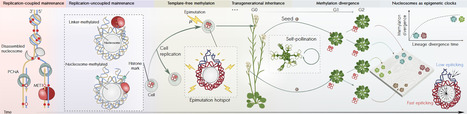
Using a combination of approaches to track methylation in living cells, single-molecule sequencing, and genetic analyses, scientists have demonstrated in Arabidopsis thaliana that the maintenance of DNA methylation is not limited to replication. It continues into the G2 phase of the cell cycle.
The study also reveals that MET1, the primary enzyme responsible for maintaining CG methylation in plants, is capable of methylating DNA organized around nucleosomes and restoring certain lost methylation marks. Analyses based on genomic data from mammals suggest that this property is also shared by its homolog DNMT1.
These results thus highlight a previously underestimated component of the dynamics of DNA methylation, which may contribute to both the stability and the evolution of methylation profiles over time.
22/09/2026